Archive for the ‘Scratch Built’ Category

Slow progress on the boards but progress is

being made.

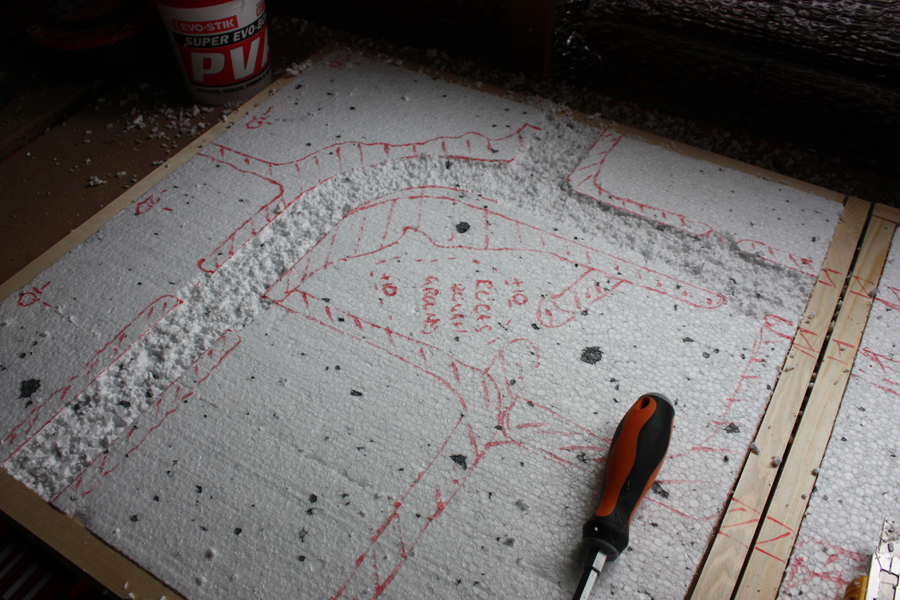
Ok so next thing I did was mark up with a big

red felt tip pen a general outline of where I

wanted everything to go.

Click on a picture to enlarge:

IMG_6210a

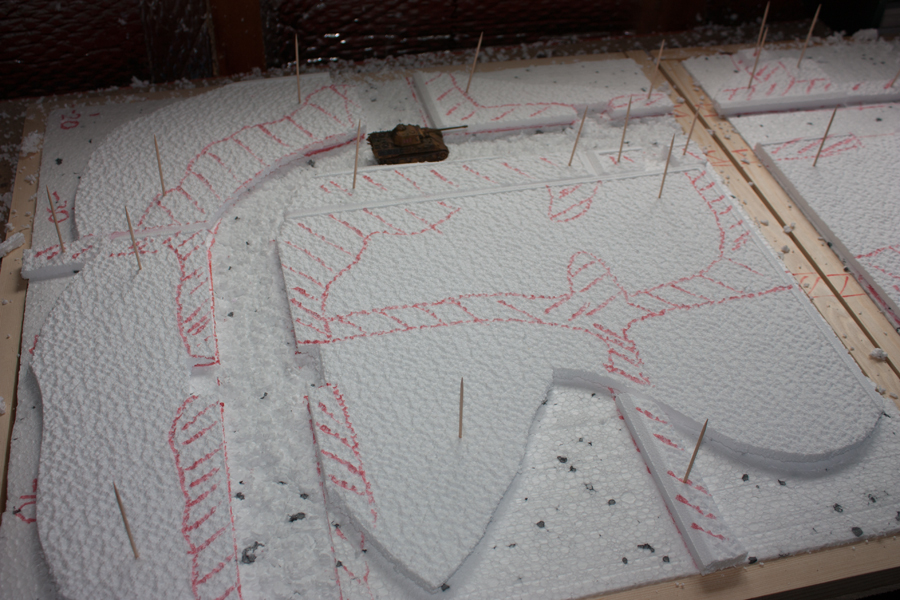
As you can see I had some help from a passing

Panther tank.

Then I started scraping out the styrene road

route using a screwdriver and sharp knife. I

also put down a tile size layer of styrene to

help build up the scenery.

IMG_6215a

IMG_6219a

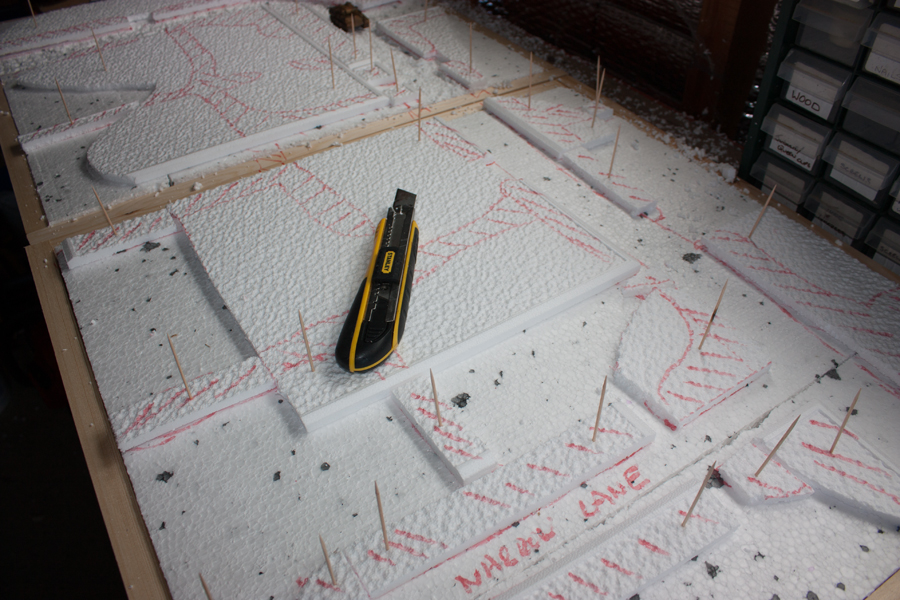
The tile layer is built up using more tile

where required and is stuck down again with PVA glue.

The cocktail sticks are used to temporarily hold things

in place while the glue sticks.

IMG_6221a

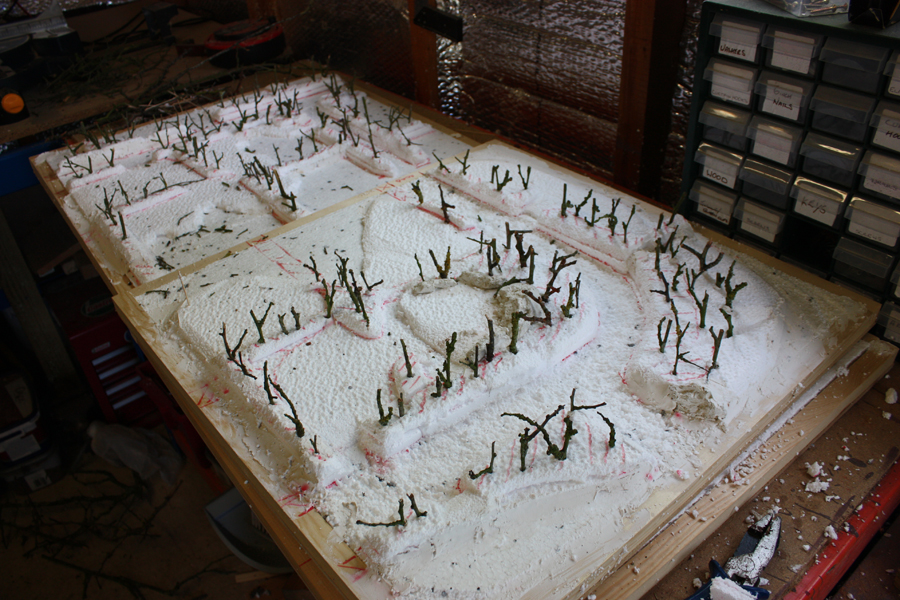
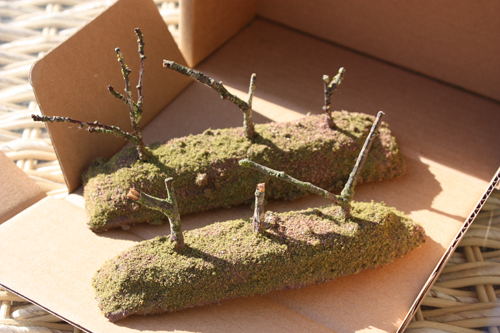
The next part of the plan is the foundation for

the bocage hedges. As far as I`m concerned bocage

has just as much tree in it as hedge. So I`m using

twigs as trees and sticking them with glue into the

hedge lines. They will help the horsehair bocage stay

in place.

IMG_6420a

IMG_6421a

Some of you have probably noticed that my boards

have a permanent look about them. The plan is to make

the terrain 50/50(half fixed/half moveable).

Anyway that’s it so far.

I have been making small bits of terrain for some time and recently

a lot of Western front WW2 type stuff. Unfortunately I have an

Eastern front type terrain board which has been disguised , very

badly as of late to look like Normandy 😦

So without a further thought of what I`m letting myself in for

and inspired by Arkiegamer ,its off to the shed and out with

power tools 🙂

Now I started this project a couple of months back and to be honest

I have been up to other things but in an attempt to get myself moving

its time to post up my progress and get on with it.

Stage one was to build the standard boards which I already use. By

keeping to the same sizes they will fit perfectly in my terrain storage

tower(sounds impressive but wait for the picture).

IMG_6946a

My terrain boards are 610 x 610 in size, which fit nicely on most tables

and are not to bulky to move around as a permanent set up board is out

of the question.

I basically cut out four battens of strip wood(2cm x 2cm) and sand off any rough

edges.
IMG_6192a

These are then glued down onto a 6mm MDF board using industrial PVA

glue.
IMG_6191a

IMG_6203a

Once dry a couple of small screws are screwed through the MDF from underneath

the board into the battens to add to rigidity.

Next up I use styrene boards which just happen to be the exact height of

the battens. Cut out the desired shape with a saw(best tool for cutting large

bits of styrene neatly) and glue down again

with industrial PVA, use plenty. Please note by industrial PVA glue I mean the

stuff builders use for sticking just about anything . You can also use wood glue for

sticking down the wood if you choose.

IMG_6202a

IMG_6200a

Now we have the basic battle board all ready for whatever you plan to do.

For my project I made four of these basic boards.

Just as a note in case any body is interested, this is what the basic costs

are but a large amount of the stuff I already had in stock. The prices quoted

make at least four boards.

1. 6mm sheets of MDF x 2 £10.
2. 2×2 lengths of strip wood x 2 £12.
3. PVA glue big pot £8.
4. Styrene in packs of 5 £14.
5. Small screw pack £3.

So £47 so far or $80 dollars for you guys over the pond 🙂

Compared to GW boards x 6 at £170 or $289 and I will have lots

of kit left over for more boards.

As I was building in the shed I went all out and

had a go at Teddy Bear fur fields.

Once again trusty ebay did the job and up

turned a bag of hair. After reading online I

found an old pair of clippers and lowered the height

of the fur which must start at about at least 2 inches

or more. Anyway either the clippers were blunt or who

knows what, but it was useless. Plan B came into force

and out came the trustee scissors which worked a treat.

I cut a lowered section of fur through the middle so it looked

like a natural path.

Now for the colour. The fur comes as a natural creamy/

brown which is great as grass is usually that colour

towards the bottom, away from sunlight. I borrowed the

kids hogs hair brush(big fat thing) and dry brushed

acrylic paint into the fur, trying to only paint the

top third of the fur. I basically started with a dark

green and got steadily lighter.

1st shot after 1st lot of paint:

IMG_6275b

2nd shot, more paint:

IMG_6286b

3rd shot surrounded by bocage:

IMG_6370b

I think it worked out well and once surrounded by

additional terrain such as walls and hedges it will

look even better.

Deep in the depths of my shed I have been experimenting

with the bocage and have finally got a winner, perhaps ?

Step One:

Polystyrene was used for the banking(light and dirt cheap)

and cut to shape, then pva glued. I based one on 3mm mdf

and didn’t bother with the other. The cocktail sticks

are just to hold it together while gluing.

IMG_6250a

Step Two:

Add some twigs from the garden as tree trunks and glue

into place.

IMG_6252a

Step Three:

I used standard house hold filler to smooth off the bank

and any sharp edges. I then cover everything in pva glue

and added a mix of sand and stone for texture. Let dry.

IMG_6257a

Step Four:

Paint brown with house hold paint.

IMG_6260a

Step Five:

More pva glue over all and add your flock/scatter mix.

I tried all green at 1st but found the brown gave it a

better look.

IMG_6263a

Step Six:

Grab your self some rubberised horse hair(ebay was cheap)

and separate it out into thin bits. It comes as a thick

section and reminds me of horse jumping hedges. Now with

your pva glue again thread between your twig trees and glue

down. I found you had to put weights on the horse hair while

gluing as it springs up otherwise. I added a bit of moss as

well.

IMG_6270a

Step Seven:

Using a spray bottle(50/50 pva glue and water) spray the

horse hair with your glue mix. Now sprinkle on your scatter

so it looks like leaves. Leave it dry over night.

IMG_6287a

This is what it looks like next to a field and with a tank in:

Click on the image to get a bigger version 🙂

IMG_6354a

I tried two other methods of making bocage from moss but

was not happy with the outcome.

Also the bocage next to field is not 100% finished and

needs a bit of airbrushing here and there.

What do you think ?

I need to get my lava painting skills up to scratch and was

wondering how everybody else paints lava ?

These two are examples I have experimented on. Please note the Terminator

was not painted by me. I only made and painted the base on the Terminator.

I used plasticard to built up the bases. Black base coat and Dawnstone dry brush

for the rocks. The lava was basically Dark red through to orange and a tiny white

line through the middle.

IMG_6099a

IMG_6100a

IMG_6101a

Came across a metal Ork Nob, painted very badly,in
one of a large number of dust covered boxes I have.
He originally came with a mace and axe and I
suspected him to be more Warhammer fantasy than 40k,
but on checking he appears in Orks Collectors Guide
as part of the classic range. Saying that I still suspect
he has a very close twin look a like in the fantasy range ?

Anyway removed the axe and mace(replaced with shoota in each
hand),added a boss pole made from spare parts and plasticard,
added additional armour(back plate and jaw plate) and put
him on a jazzed on base.

IMG_5922

IMG_5924

IMG_5925

IMG_5926

IMG_5923

Now he looks like an Ork moving up in the world of
Ork hierarchy until somebody bigger rips of his arms
and hangs them on their own boss pole.

Ork Work and lots of it

Posted: February 26, 2014 in 40k, Orks, Scratch Built, Terrain
Tags: ,

I have been attending to my Orks as of late and
everything in this post is newly finished.

My Orks needed a base of sorts so out came the
bits box, plasticard and some filler. I blatantly
borrowed an idea of using a CD case holder as a
starting point from http://www.ifelix.co.uk. I then
added a walkway to another ground based fort.

IMG_5917

IMG_5911

IMG_5912

IMG_5910

IMG_5908

IMG_5902

I added some fun detail with a dead Blood Angel
minus his arms and a foot tied up in wire to
the outside as a sort of Ork welcome mat.

IMG_5880

A few Ork glyphs made from plasticard

were stuck on.

IMG_5882

IMG_5884

An access hatch was added for the Gretchin.

IMG_5885

A nice bloody access point was also added at

ground level.

IMG_5889

I also painted up some more Orks and Gretchin

and made a free standing Ork Glyph to warn off

anybody in the near by area.

IMG_5895

IMG_5914

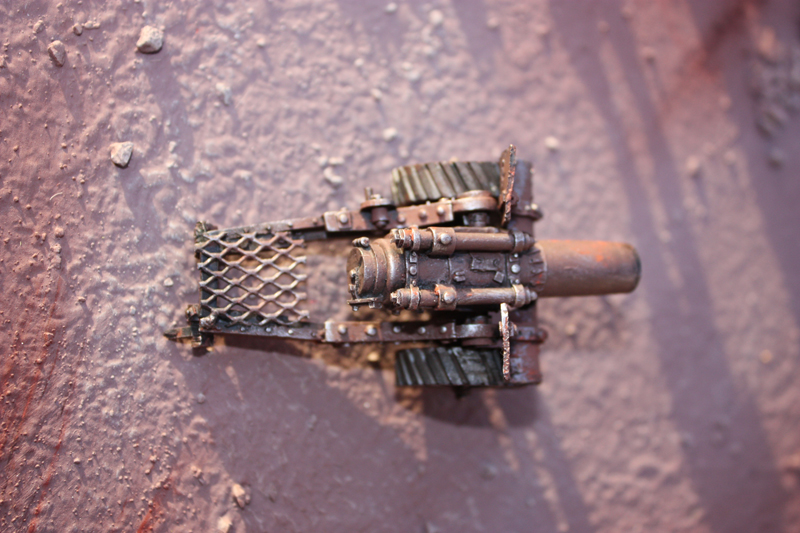
Oh and one last thing I added a Kromlech

cannon nicely covered in rust and slightly

kit bashed.

IMG_5905

IMG_5906

IMG_5907

Also forgot to mention that the walkway/bridge

comes straight off so it makes storage nice

and easy.

Needed something to sit next to my panzers

and just remind everybody that Blitzkrieg was not

all lightning warfare. The vast majority of the

German army went to war on foot or was pulled

by a horse. In this case they came back by horse.

It was built from balsa wood, two Napoleonic horses

from Essex miniatures and some wire.

Untitled-1

Untitled-2

Untitled-3

Untitled-4

Road tested this rig, the weekend just gone and

found the perfect use for it. After an hour of

play out comes the horse drawn ambulance telling

all players its time for a cup of tea and a break.

This is my first female conversion so I went for nice and simple, using a standard Cadian Shock body

and sticking on a Future Skirmish female head(its the female with the SMG).

I changed the arms and sorted out a different back pack.

I also added a pilot type helmet so she looks a little like ground crew.

I figure ground crew would have small fire arms as well.

IMG_5253

IMG_5257

IMG_5258

IMG_5260

IMG_5262

There are a few female conversions about on the net

and I find most of them give women big hips,

curving busts and red lips.

In real life females in combat wear one size fits all mens sizes so the

exact opposite appears……baggy clothing.

Instant Mold

Posted: August 5, 2013 in 40k, Scratch Built
Tags:

I`m always needing spare vehicle hatches for rhinos and the going rate on ebay is £2 a hatch plus £2 postage. As I`m not going to pay that,time to have a go at making some myself .

Bring on the Instant Mold at £12 a packet. You get six mold sticks and you can re-use them as many times as you like.

IMG_4809

First of all build yourself a quick lego molding cast.

IMG_4810

Next boil a kettle and drop a couple of Intant Mold sticks into a bowl of boiling water for about 2mins.

Next remove one Instant Mold from the bowl(Its safe to handle with your hands and is still semi solid) and

put it in the bottom of the lego cast .Press it down firmly.

Next drop in your part to mold(rhino hatch) and push it down firmly into the Instant Mold so only the bottom

part of the hatch is sub merged. The top of the hatch should still be visible.

Now put the next bit of Instant Mold on top of the hatch in the cast and press it down firmly.

Leave for 20 mins to cool.

Now carefully take apart the lego cast and you should have a solid mold.Using a sharp craft knife cut the mold

in half so you have a top and bottom mold.

The picture below is the molds cut in half. I did two hatches at the same time.

IMG_4812

Now fill the molds with green stuff and then stick the molds back together(top and bottom) and leave to dry.

Once the green stuff is hard gently remove it from the mold and you have your cast rhino hatch.

Trim the green stuff to remove any flash.

IMG_4811

Insert into rhino and check it fits.

IMG_4813

Granted the mold is not perfect but this was my first attempt and apart from the drying time of the green stuff its a very quick and easy process.

Its also a lot less money than buying the parts and open ups loads of possibilities for duplicating parts and scratch building your own bits.

When the paint is on,who will ever know its a mold ?